Bespoke Staircases in Dundalk and Co. Louth, Built by Setanta Woodcraft
The staircase is the first piece of joinery most people see when they walk into an Irish home. It sets the tone for everything that follows. A well-built hardwood staircase in solid oak, with a properly made balustrade and clean string detail, reads as quality before you have looked at anything else. A carpeted softwood staircase with a painted MDF balustrade says something different.
Setanta Woodcraft & Carpentry builds and renovates staircases across Co. Louth, South Armagh, and the Dundalk-Newry corridor. John McShane designs, builds, and fits every staircase himself, from the workshop in Carlingford. If you commission a staircase from Setanta, the person who takes your measurements is the same person who builds it and fits it.
What Setanta Builds
New Hardwood Staircases
A complete staircase from scratch: strings, treads, risers, newel posts, balustrade, and handrail. Built in solid oak, ash, or walnut depending on the brief. Designed to the specific rise and run of your floor plan, not adapted from a standard staircase module.
New staircases are most common in new builds and in properties where the existing staircase is structurally beyond renovation. They are also commissioned when a renovation creates an open hallway or living space where the staircase becomes a visible design feature and the existing one no longer suits its new context.
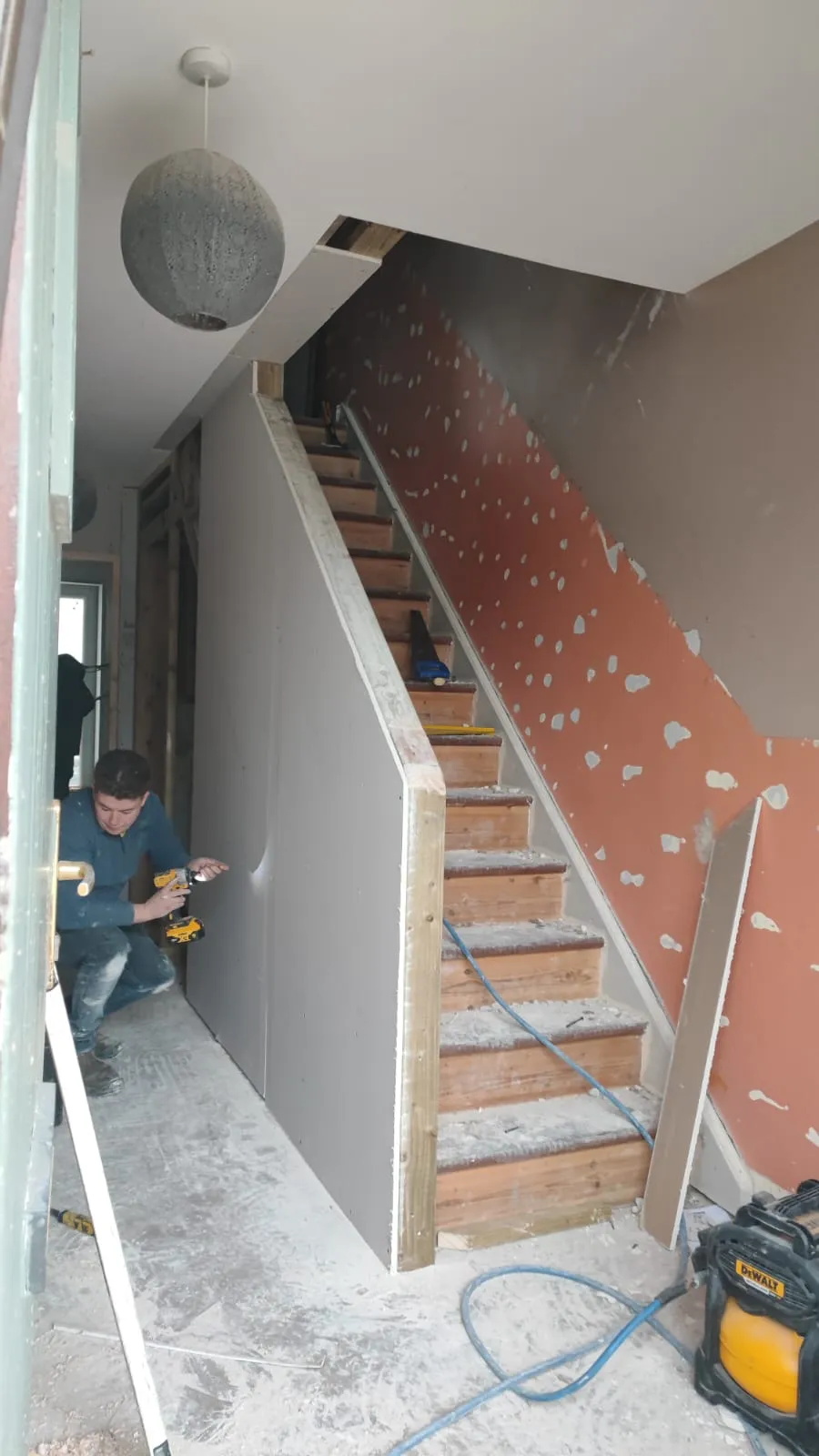
Staircase Cladding and Renovation
A full staircase replacement is not always necessary. Where the existing structure is sound, staircase cladding offers a significantly more cost-effective route to a hardwood result.
Cladding involves fixing solid hardwood treads and risers over the existing stair structure, along with new newel posts, balustrade spindles, and a hardwood handrail. The visible result is indistinguishable from a new hardwood staircase. The cost is substantially lower. The difference between cladding and full replacement is covered in detail in the staircase renovation guide.
Balustrade and Banister Replacement
For staircases where the structure is sound and the treads are in good condition but the balustrade is dated or damaged, a targeted balustrade replacement is often the highest-impact, most cost-effective upgrade available. New oak newel posts, replacement spindles, and a solid hardwood handrail transform the appearance of a staircase without touching the treads.
Heritage Staircase Restoration
Older homes across Carlingford, Omeath, and throughout historic Co. Louth often have original staircases worth restoring rather than replacing. John assesses the structural condition of original staircases and advises honestly on what is worth saving and what needs to be replaced. Where restoration is the right call, he builds replacement components to match the original detailing.
Materials
All Setanta staircases are built in solid hardwood. The main species used:
- Oak: the most widely used, warm grain, works in both traditional and contemporary interiors, finishes well in hardwax oil or lacquer
- Ash: slightly lighter in tone and a little harder than oak, clean straight grain, suits contemporary interiors
- Walnut: premium choice, rich dark colour, suits high-specification homes and statement hallways
String boards, risers, and structural elements are typically in the same species as the treads for visual consistency. Where a hybrid approach is used, such as oak treads with painted softwood risers, the design intent is agreed with the client at the outset.
Balustrade options include solid hardwood spindles, glass panels with hardwood or stainless fixings, or a combination. Glass balustrades are more expensive but create a significant visual difference in terms of light and space, particularly in narrower hallways.
Service Area
Setanta is based in Carlingford and works across:
- Dundalk and Co. Louth: new builds, renovations, period properties
- Carlingford and the Cooley Peninsula: Omeath, Greenore, Kilkeel and surrounds
- Newry and South Armagh: cross-border staircase commissions for homeowners and developers
- Wider border region: by arrangement for the right project
What a Staircase Costs
Every project is priced individually after a site visit. Realistic 2026 ranges for the Louth and South Armagh market:
| Project Type | Typical Range |
|---|---|
| Balustrade replacement only, hardwood | €1,500 to €3,500 |
| Staircase cladding, straight flight | €3,500 to €6,500 |
| Staircase cladding, with landing | €5,500 to €9,000 |
| New staircase, straight flight, solid oak | €6,000 to €10,000 |
| New staircase, L-shaped or with landing, oak | €9,000 to €16,000 |
| Premium staircase, walnut, glass balustrade | €14,000 to €25,000+ |
These figures cover carpentry and fitting. Finishing, such as hardwax oil application, can be carried out by John or by the client’s decorator.
For a full breakdown of what drives staircase costs in Ireland, the 2026 staircase cost guide covers each variable in detail.
The Process
Step 1: Site visit John comes to the site, assesses the existing staircase, takes the rise and run measurements, and discusses the design brief. For renovation projects he will advise clearly on whether cladding or full replacement is the right approach.
Step 2: Design and quote A design drawing and written quote follow. Material specifications, staircase layout, and balustrade design are all confirmed before build begins.
Step 3: Workshop build Strings, treads, risers, and balustrade components are built in the Carlingford workshop. For cladding projects this is typically one to two weeks. For a new full staircase, three to five weeks depending on complexity.
Step 4: Installation John installs the staircase himself. A straight flight cladding installation takes two to three days. A new staircase installation takes three to five days, longer for complex layouts.
Step 5: Finishing Hardwax oil or lacquer is applied after installation. John can apply the finish or coordinate with the client’s chosen decorator for a paint-and-oil scheme.
Why the Staircase Matters More Than Most People Think
Most homeowners focus renovation budget on kitchens and bathrooms. The staircase gets what is left over, if anything. This tends to produce homes where the kitchen and bathroom are excellent and the hallway looks like it belongs to a different house.
The staircase and hallway are what every visitor sees first. A well-built hardwood staircase is visible from the front door. It frames the entire first impression of the home. In terms of return per pound spent on joinery, a quality staircase renovation is one of the highest-impact investments possible in a Co. Louth or South Armagh family home.
Setanta builds fitted kitchens, fitted furniture, and flooring across the same geography. Clients who commission a staircase often add a hardwood floor in the same project, since the two pieces work best when designed together.
Frequently Asked Questions
Can you work around an existing staircase I want to keep partially? Yes. It is common for only the balustrade and handrail to be replaced, leaving the tread and riser structure in place. John assesses the full staircase at the site visit and will advise on what is worth keeping and what should be replaced for structural or aesthetic reasons.
Do you build staircases for new builds as well as renovations? Yes. Setanta works with both homeowners renovating existing staircases and with developers fitting out new builds in Dundalk, Newry, and across the border region.
How long does a full staircase renovation take? From confirmed order to completed installation, allow eight to fourteen weeks for a cladding project and ten to eighteen weeks for a new staircase. Realistic timelines are confirmed at quote stage.
Get in Touch
For a bespoke staircase in Dundalk, Carlingford, Newry, or anywhere across Co. Louth and South Armagh, contact John directly.
Phone / WhatsApp: 083 003 3268 Email: johnmcshane144@gmail.com Based in: Carlingford, Co. Louth