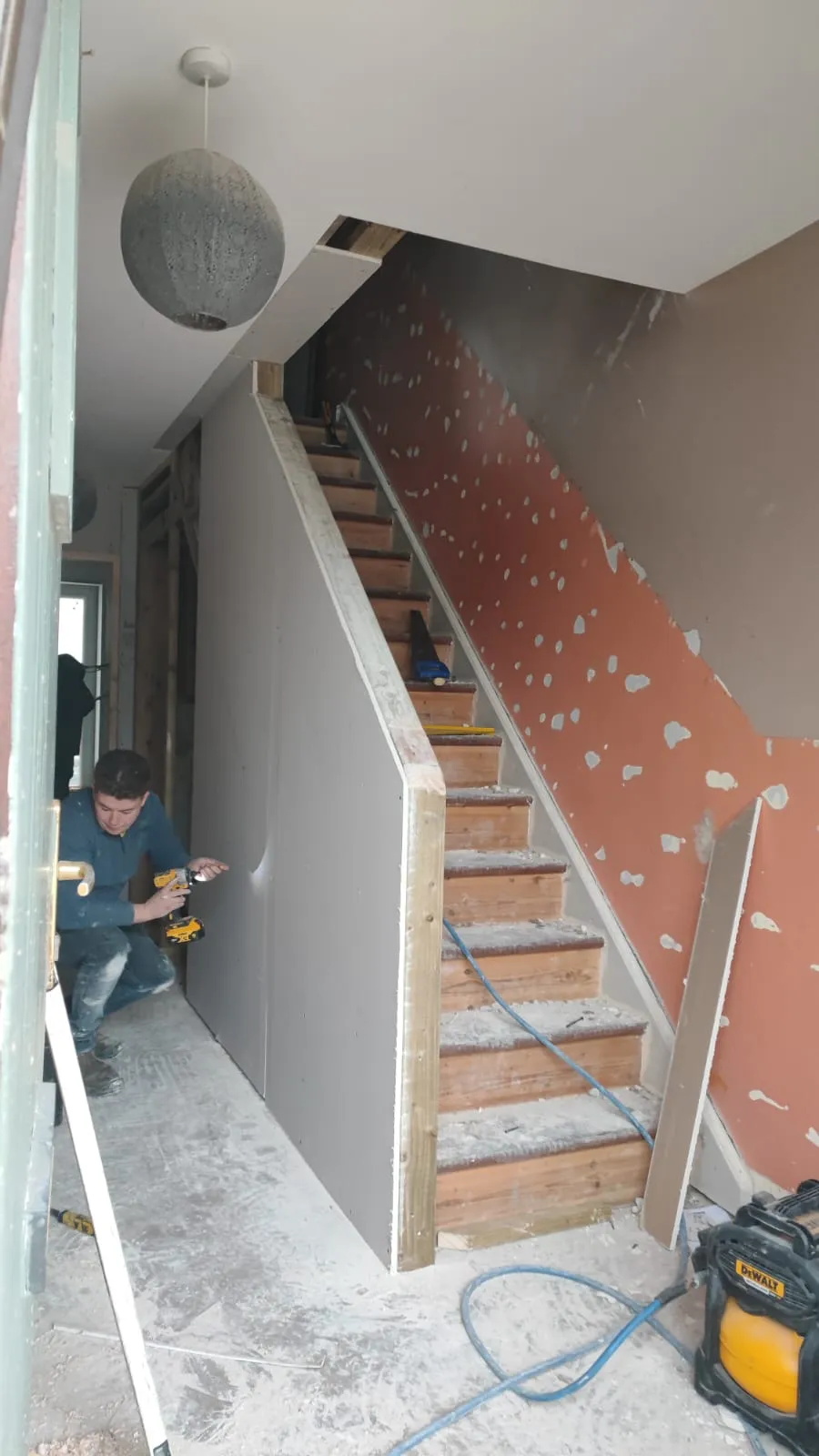
Hardwood vs Softwood Staircase: Which Is Right for an Irish Home?
The majority of staircases built in Irish homes from the 1960s to the 2000s were softwood: pine, deal, or MDF, designed to be carpeted. Durable enough for the purpose, invisible under carpet, and substantially cheaper than hardwood. For a budget build, this made sense.
For homeowners renovating or building now, the choice is less clear-cut than it might seem, and the right answer depends on what you want the staircase to do and how you plan to finish it.
What Softwood Staircases Are
Softwood staircases are built from pine or similar coniferous timber species. In Ireland, Scots pine, Scandinavian redwood, and similar softwoods are the most common.
Softwood is easier to work than hardwood, faster to cut, lighter to handle, and significantly cheaper. A straight flight softwood staircase structure can be supplied and fitted for well under €2,000. It is strong enough for domestic use when built correctly.
The limitation of softwood in a staircase context is surface hardness. Softwood marks and dents under normal foot traffic in a way that hardwood does not. This is not a problem when the staircase is carpeted, because the carpet absorbs the wear. It becomes a problem the moment you want to finish the staircase with an exposed hardwood look.
Softwood is also more susceptible to moisture in an Irish climate. In older homes with less consistent heating, pine treads can move significantly with humidity variation, which contributes to creaking and, over time, to loosening of fixings.
What Hardwood Staircases Are
Hardwood staircases are built from deciduous timber: oak, ash, walnut, or similar. The density and hardness of these species makes them suited to high-traffic surfaces that will be seen and walked on without a carpet covering them.
A solid oak tread will show wear over decades of use, but the wear is gradual and the surface can be sanded and re-oiled when it reaches a point worth addressing. A softwood or MDF tread without carpet will show significant surface damage within a few years of normal family use.
Hardwood also handles the moisture variation in an Irish home better than softwood when the timber is correctly seasoned and finished. The denser cell structure of hardwood absorbs and releases moisture more slowly, reducing the movement that causes creaking and fixing loosening over time.
The Cost Difference
Material cost is the most significant difference between hardwood and softwood for a staircase.
A straight flight softwood structure: under €1,500 for materials. The same staircase in solid oak: typically €3,000 to €6,000 in materials alone, before fitting.
This gap is real and it matters for budget decisions. But it is worth understanding what you are buying at each price point.
A carpeted softwood staircase in a house where the staircase will always be carpeted is a perfectly rational choice. The material cost saving is genuine and the result is fine for the purpose.
A softwood staircase that you intend to finish with exposed timber is a poor investment. The surface will not hold up to family use without a carpet, and a carpet defeats the aesthetic purpose of choosing an exposed finish.
If you want an exposed hardwood finish, budget for hardwood. The alternative is spending money on softwood and spending more money later replacing it.
Comparing the Two Options Across What Matters
Durability under foot traffic
Hardwood: Excellent. Oak and ash are dense, resistant to denting and surface damage, and hold their finish well over years of use.
Softwood: Adequate under carpet. Poor for an exposed finish in a family home. Pine will show scuffs, heel marks, and impact damage quickly on an unprotected surface.
Winner: Hardwood for exposed finish. Softwood is adequate if permanently carpeted.
Appearance
Hardwood: The grain, colour depth, and natural variation of solid oak, ash, or walnut are not replicable in softwood. A hardwood staircase finished in hardwax oil has a warmth and quality of surface that is immediately distinguishable.
Softwood: Painted softwood can look clean and considered. Exposed softwood has a lighter, more open grain that some clients prefer for a Scandinavian-influenced interior, though it requires more careful protection in a high-traffic area.
Winner: Hardwood for most applications. Personal preference applies.
Handling Irish climate conditions
Hardwood: Dense, slow to absorb moisture, more dimensionally stable across the humidity cycles an Irish home produces.
Softwood: Moves more readily with humidity variation. More prone to creaking, particularly in older homes with inconsistent heating.
Winner: Hardwood.
Cost
Hardwood: Higher upfront. Full flight in solid oak fitted: €6,000 to €10,000. Cladding an existing softwood structure in oak treads: €3,500 to €6,500.
Softwood: Lower upfront. Full softwood structure fitted: €1,500 to €3,500.
Winner on upfront cost: Softwood. On cost over the life of the staircase, hardwood wins where an exposed finish is the intention.
The Practical Answer for Most Irish Homes
For a family home in Co. Louth or South Armagh where the staircase will be fully carpeted and the hallway is not a design priority, a softwood structure is a reasonable choice and there is no need to spend the hardwood premium.
For a home where the staircase is visible, where an open hallway makes it a design feature, or where the renovation budget is focused on producing a high-quality finish throughout, hardwood is the only sensible choice. The staircase cladding option makes hardwood accessible in most renovation scenarios without requiring a full structural replacement.
For new builds in the Dundalk and Newry corridor where the specification is at the quality end, solid oak or ash throughout is the expected standard.
Frequently Asked Questions
Can I use a softwood structure with hardwood treads on top? Yes, and this is a common and cost-effective approach. A pine or MDF structural staircase with solid oak treads cladded on top, new hardwood newel posts, and a solid oak handrail produces a staircase that reads as all-hardwood from the front. It costs less than a full hardwood structure and is entirely appropriate where the visible surfaces are what matter.
Is ash a good alternative to oak for a staircase? Yes. Ash is slightly harder than oak, has a clean straight grain, and is well-suited to contemporary interiors. It costs similarly to oak and performs comparably in a staircase application. If you prefer a lighter, more neutral timber tone, ash is a strong choice.
How often does a hardwood staircase need to be refinished? The treads, as the highest-wear surface, benefit from a maintenance coat of hardwax oil every three to five years in a normal family home. The balustrade and handrail require less frequent attention. A full refinish, sanding and re-oiling from scratch, might be warranted after fifteen to twenty years of heavy use.
For a hardwood staircase in Dundalk, Carlingford, Newry, or across Co. Louth, contact Setanta Woodcraft to discuss your project. The site visit and assessment are always the starting point.