Live Edge vs Traditional Joinery: Which Is Right for Your Home?
Both live edge woodwork and traditional joinery are made from the same material by the same craftsman at Setanta. The difference is in what each approach does with that material: live edge celebrates the timber in its most natural form, while traditional joinery imposes a designed structure on the timber that subordinates the material to a function.
Neither is objectively better. They suit different purposes, different rooms, and different sensibilities. This guide is a straight account of when each is the right choice.
What Live Edge Work Is Doing
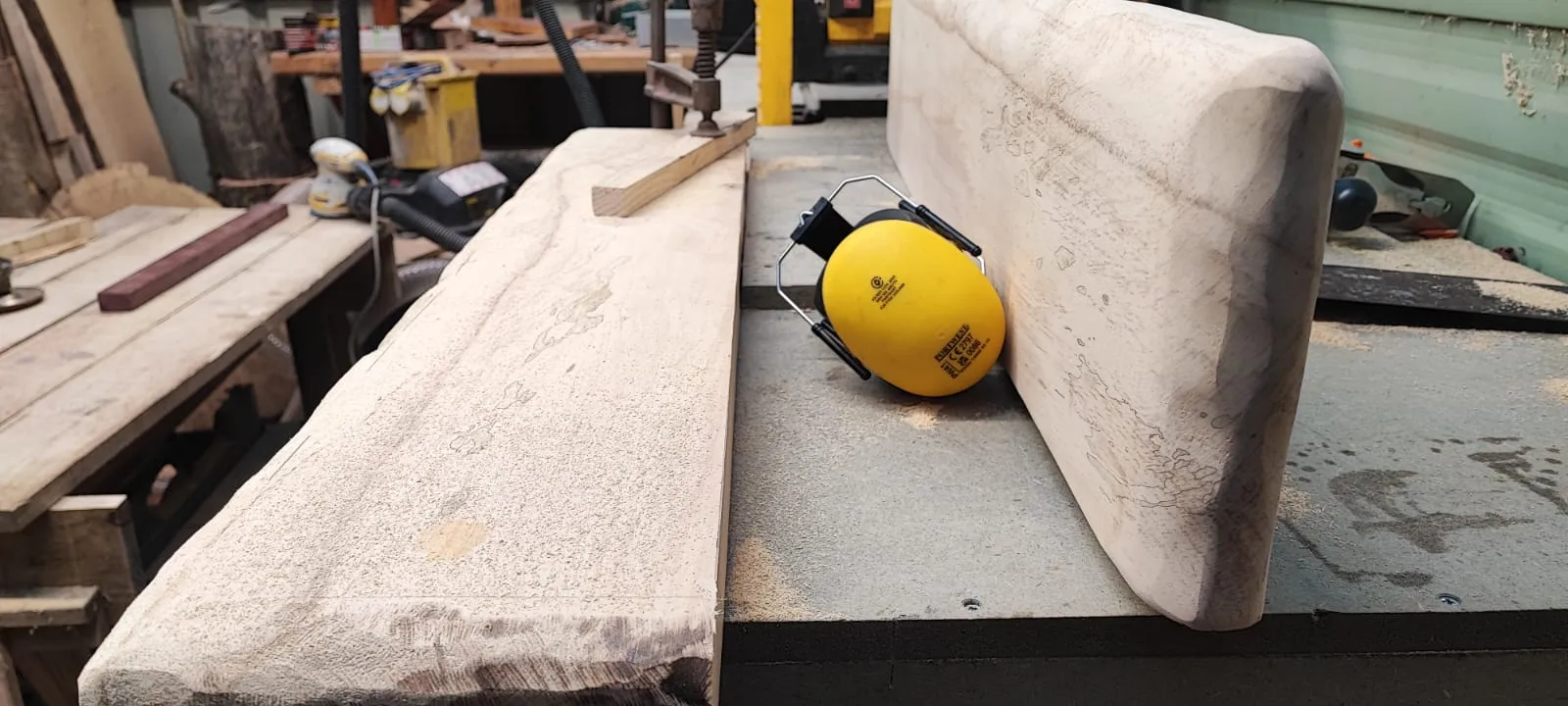
Live edge furniture makes the timber the primary subject of the piece. The slab drives the design. You choose the slab, John works with its natural form to produce the best expression of what it is: a section of a tree with its natural edge, its grain figure, its growth history, all of it visible and present in the finished piece.
A live edge dining table in a room is unmistakable. It is not background furniture. It does not disappear. It has presence, and that presence is entirely the result of the timber rather than the craftsman’s imposition on it.
This approach is right when the timber character is what you want to experience in the room. When you want a piece that is genuinely unique, that cannot be replicated, and that carries something of where it came from.
What Traditional Joinery Is Doing
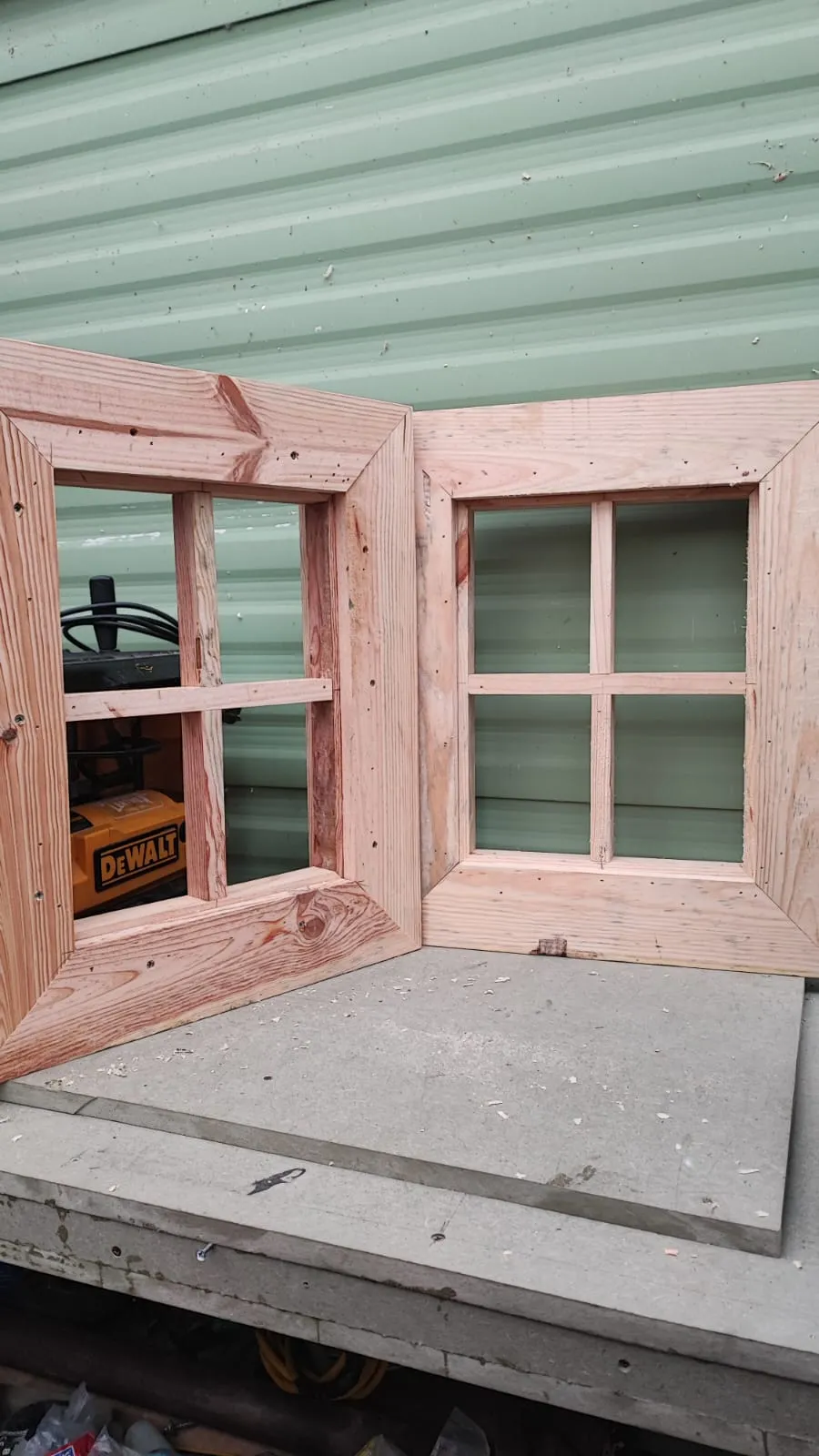
Traditional joinery, fitted kitchens, wardrobes, staircases, door frames, and furniture made to precise dimensions, uses timber as a material in service of a designed structure. The timber’s job is to perform the function of the piece: to hold a door in a frame, to carry the weight of a stair tread, to provide a drawer that opens and closes reliably.
The craftsman’s skill in traditional joinery is in making the structure correctly, maintaining consistent dimensions, fitting precisely, and finishing to a standard that does not call attention to itself. The best traditional joinery is invisible: you notice that the kitchen feels right, not the individual joints.
This approach is right when precision, reliability, and consistency are what the commission requires. When the piece needs to fit exactly, function correctly, and endure decades of use without developing problems.
When Live Edge Is the Right Choice
Live edge works best when:
The piece is a centrepiece, not a background element. A live edge dining table, a live edge coffee table in a living room, a feature shelf above a fireplace or in an alcove. Pieces that occupy a prominent position in the room and benefit from visual presence.
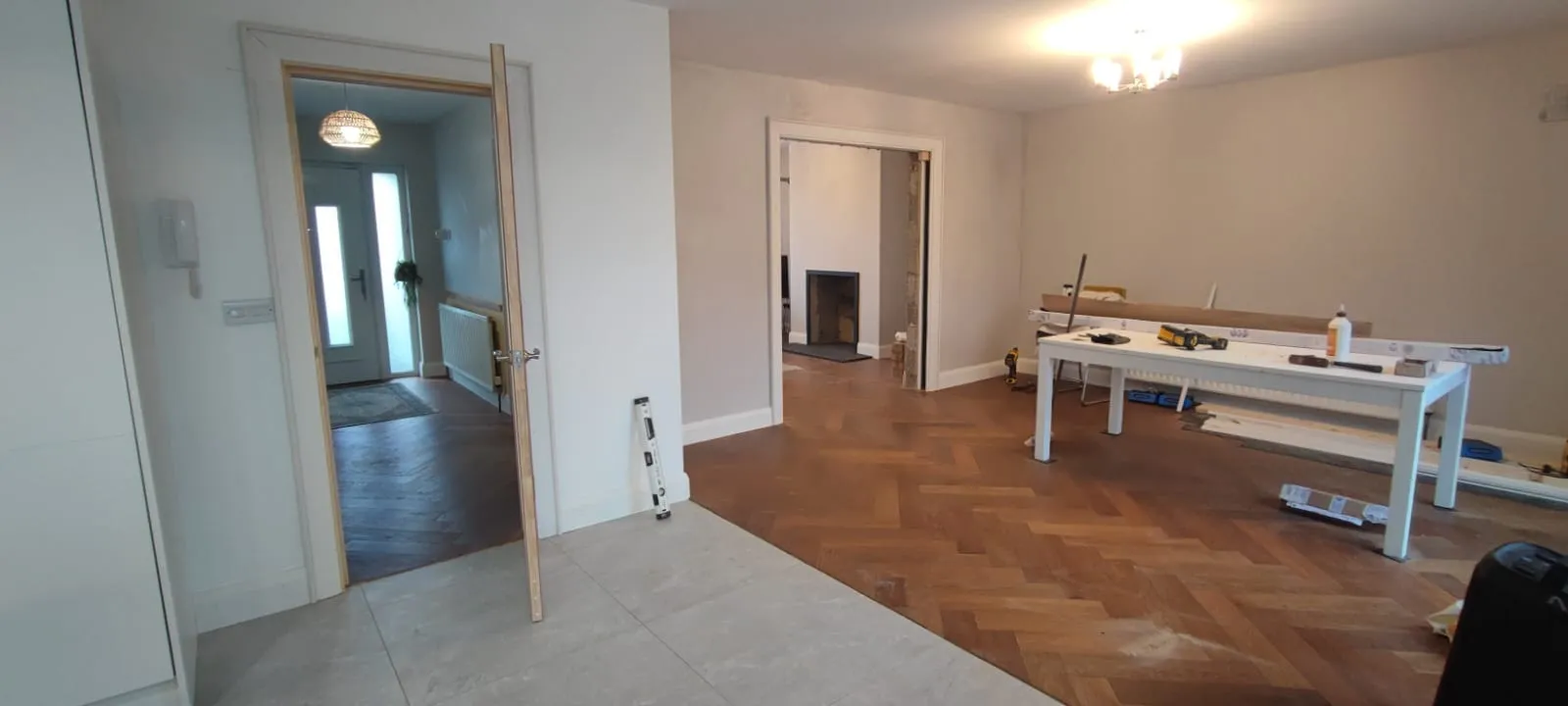
The room has a mix of natural and contemporary elements. Live edge sits well against white walls, steel fixtures, and concrete or tiled surfaces. It bridges industrial and natural in a way that conventional furniture often cannot. It also suits more traditional rooms where original timber features are already present.
The client values the individuality of the piece. Every live edge piece is unique. The slab that becomes your dining table is the only one that will ever look exactly like that. If the uniqueness of ownership matters, live edge delivers it.
The scale of the piece suits the slab format. Dining tables, coffee tables, shelving, and desk surfaces are natural live edge applications. A set of kitchen cabinets or a staircase is not. Live edge works in slab-format pieces where the natural character of the timber can be expressed across a significant surface.
When Traditional Joinery Is the Right Choice
Traditional joinery is right when:
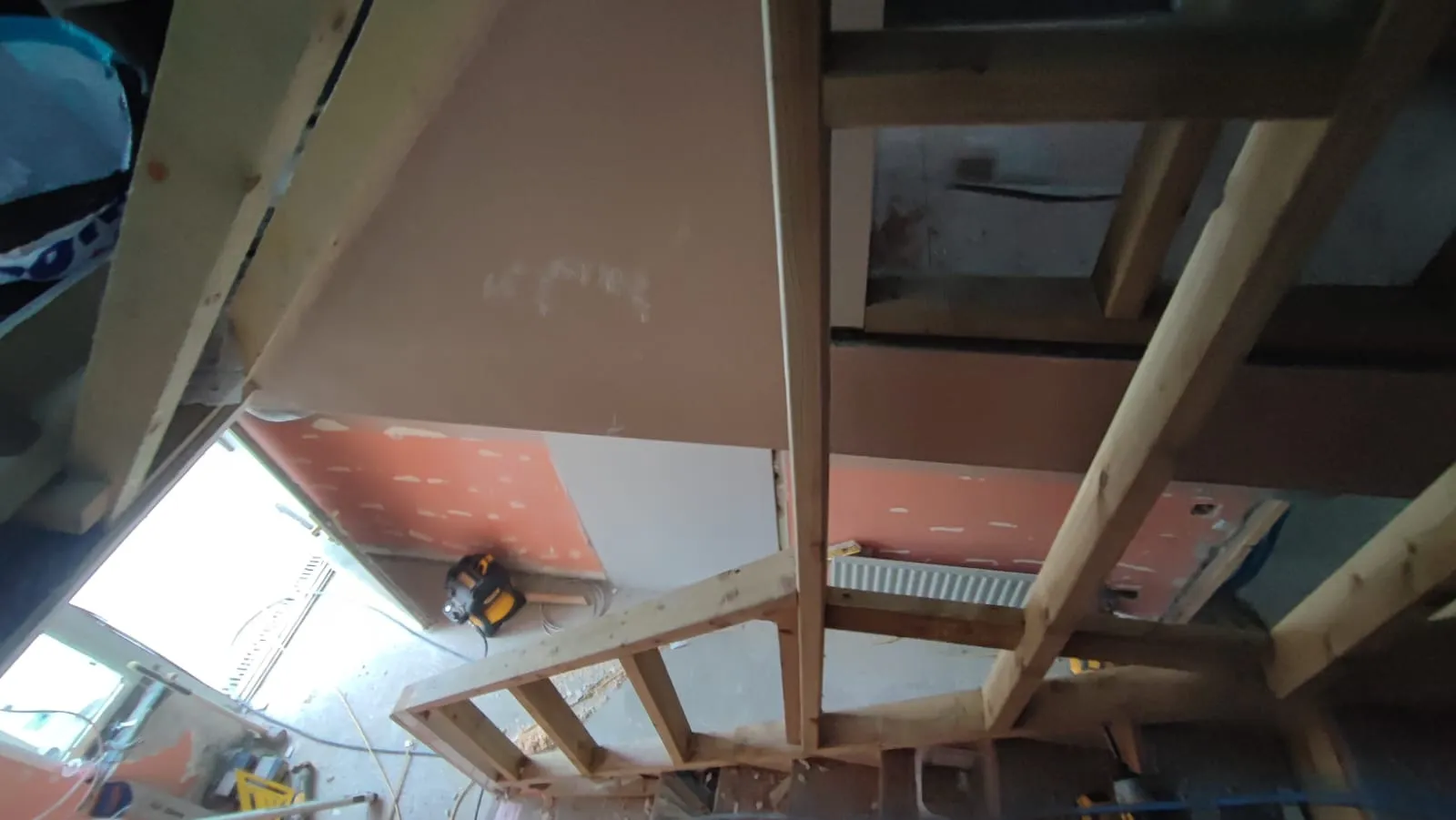
Precision fit is non-negotiable. A kitchen, a wardrobe, a staircase: these need to be built to millimetre tolerances and fill specific architectural spaces. Live edge slab does not lend itself to this kind of dimensional control.
The piece must subordinate itself to the room. A well-made kitchen disappears: you are aware of the space, the functionality, and the atmosphere, not the individual door joints. Traditional joinery, when done well, achieves this invisibility.
The piece needs to match other elements in the same space. A bespoke fitted wardrobe needs to relate to the skirting boards, the ceiling height, and any other joinery in the room. Live edge pieces, by contrast, work by contrast and singularity rather than matching.
Budget discipline is required across multiple pieces. A single live edge dining table at €2,500 is an achievable commission. A full kitchen in live edge slab format is not a realistic brief. Traditional joinery in solid hardwood is the correct approach for comprehensive fit-outs.
Can Both Work Together in the Same House?
Yes, and this combination is increasingly common in the homes John works in across Co. Louth and South Armagh.
A kitchen in solid oak with traditional joinery, paired with a live edge oak dining table: the material is the same, the manufacturing approach is entirely different, and the combination produces a kitchen-dining space where the quality of both is enhanced by the contrast.
A staircase in solid hardwood with traditional balustrade detailing, in the same house as a live edge console table in the hallway. A fitted bedroom wardrobe in painted MDF, in a room that also contains a live edge bedside table in walnut.
The key is that the timber species and general tone are consistent, even if the design approach is different. Mix the materials carelessly and the result is incoherent. Mix them deliberately and the result can be very good.
Frequently Asked Questions
Is live edge furniture more expensive than traditionally made furniture? It depends on the comparison. A live edge dining table at €2,500 costs more than a machine-made dining table from a furniture retailer. It costs less than a fully bespoke traditionally jointed table of the same quality. The slab is expensive raw material but the making process is less intensive than traditional joinery. The comparison is not straightforward.
Can live edge furniture be commissioned to a specific brief or do I just accept what the timber produces? Both. John works with clients to find slabs that suit their brief: desired species, approximate width, general character. The natural form then shapes the final piece within those parameters. You are choosing from the range of what that timber can become, not from a product catalogue.
Is live edge furniture fashionable and will it date? Live edge as a commercial trend has been visible in furniture retail for a decade. As an approach to working timber, it is as old as woodworking itself. The pieces John makes are not expressions of a trend. They are expressions of what that particular piece of timber is. Whether the trend fades is irrelevant to the longevity or quality of the piece.
For live edge commissions alongside the full range of traditional joinery and fitted woodwork from Setanta, contact John on 083 003 3268. For a full picture of live edge costs, the 2026 dining table price guide covers the main variables.