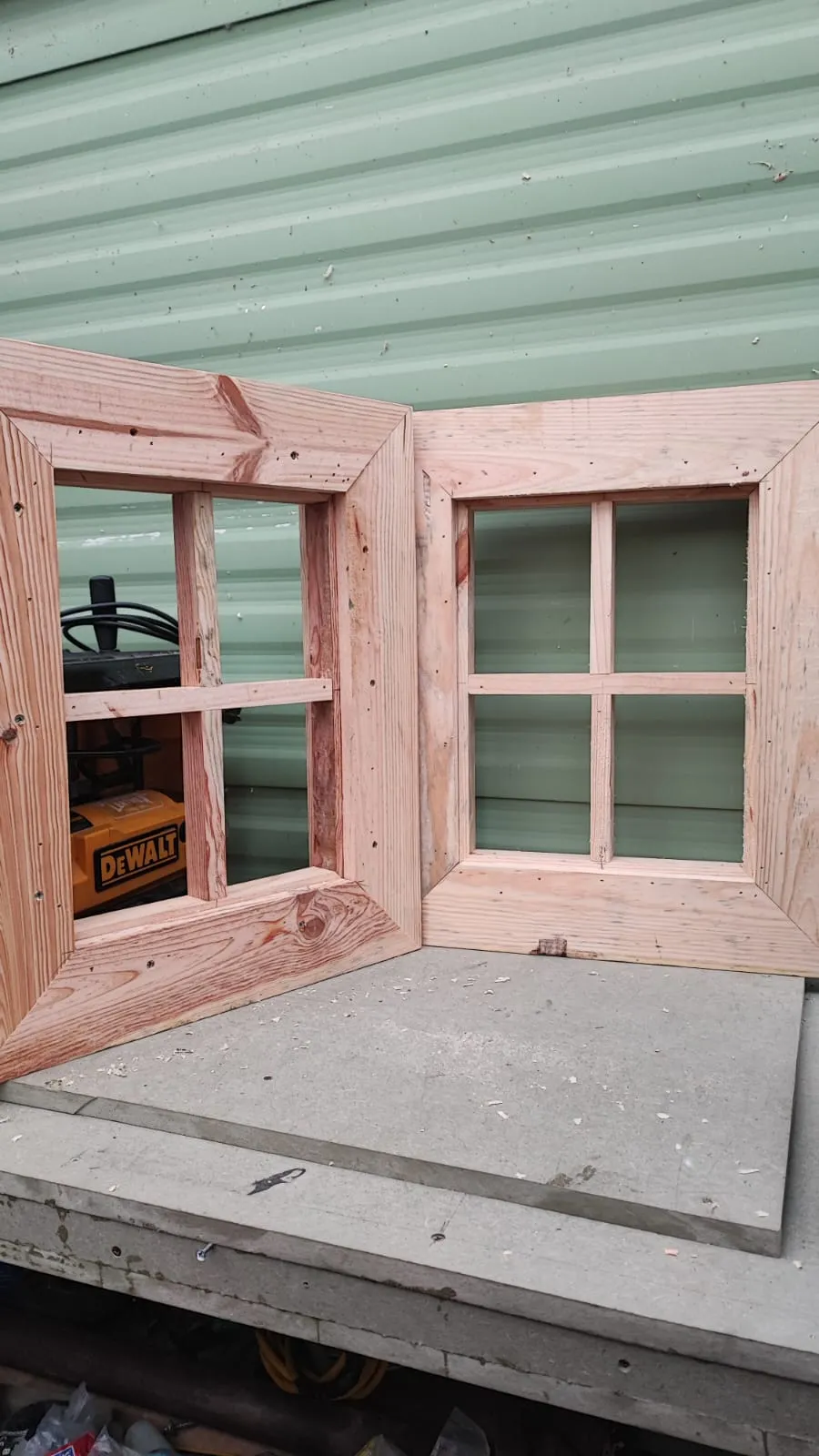
Custom Wooden Window Frames in Co. Louth: Why Standard Sizes Do Not Fit Older Homes
Window replacement is one of the most commonly deferred home improvement projects in Co. Louth. The draughts are familiar. The condensation on single-glazed glass is an accepted winter condition. And the prospect of replacing windows feels complicated, expensive, and disruptive.
The practical reality for most older homes is more straightforward than it appears, once you understand what the options actually are.
The Problem with Standard Window Sizes
The window industry in Ireland, like most construction product sectors, standardised around a set of common dimensions in the latter half of the twentieth century. Standard casement windows, standard sash windows, and standard opening configurations are produced in volume and sold at the lowest possible cost per unit.
The problem is that older homes across Carlingford, the Cooley Peninsula, and throughout Co. Louth were built to no such standard. Stone cottages, Victorian terraces, Georgian townhouses, and pre-war farmhouses have window openings that reflect the materials and conventions of their time, not the production convenience of a 1970s manufacturer.
The result is that a standard-size window does not fit. Installers address this in one of three ways: they pack the frame to fill the gap (which reduces the glazed area and looks visually wrong), they enlarge or reduce the structural opening (which is intrusive and expensive), or they trim the frame to fit (which compromises its structural integrity).
A custom-made window frame built to the exact measured opening fits correctly, fills the reveal completely, and looks as though it was always there. On an older home, this matters both aesthetically and structurally.
What Custom Timber Window Frames Involve
Measurement
The precise measurement of an existing window opening requires measuring at multiple points. Openings in older construction are rarely perfectly rectangular. The head may not be parallel to the cill. The jambs may not be plumb. The reveal depth varies between the inner and outer leaf in cavity construction.
John takes all of these measurements at the site visit and builds the frame to accommodate them, rather than building a square frame and expecting an irregular opening to accommodate it.
Material
The most common specification for custom window frames in Co. Louth and South Armagh is either hardwood or Accoya.
Hardwood (oak or idigbo): Durable, handles Irish weather well when correctly finished, suited to both traditional and contemporary window designs. The natural grain gives warmth and character to the frame.
Accoya: An acetylated softwood with hardwood-equivalent durability and exceptional dimensional stability. Accoya does not rot, does not warp, and does not require the same frequency of repainting as standard softwood. It is increasingly used for window frames on exposed coastal and rural sites, including properties on the Cooley Peninsula facing the Carlingford Lough. It costs more than standard hardwood.
Softwood (treated pine or similar): Appropriate for sheltered positions where cost is the primary consideration and the maintenance commitment is accepted. Less durable than hardwood or Accoya on exposed sites.
Glazing
Custom timber window frames are typically fitted with double-glazed sealed units to current building regulation standards. The sealed unit specification (gas fill, low-E coating) is chosen to match the thermal performance requirement of the opening and the heating system in the building.
The glazing is fitted as part of the window commission, so the completed unit arrives at site ready to install rather than requiring separate glazing by a different trade.
Profile
The window frame profile, the visible section of the frame and opening light stile and rail, is designed to suit the property. For a heritage property in Carlingford village, a slimmer traditional section that references the original glazing bar proportions of the building is appropriate. For a modern extension on an older property, a wider contemporary profile may suit the design better.
This design decision is made at the measurement and design stage, not as an afterthought.
When Custom Timber Is the Right Choice
Custom timber window frames are the right specification when:
- The opening dimensions are non-standard, which applies to most pre-1960 construction in Co. Louth
- The building has period features that standard uPVC profiles would visually undermine
- The building is a protected structure or within an Architectural Conservation Area, where non-traditional materials may require consent
- The client values the material quality and is prepared for the maintenance requirement
- Long-term durability is a priority: a quality hardwood or Accoya window frame, correctly finished and maintained, has a lifespan of thirty to fifty years
Custom timber is not always the right choice. For a 1990s semi-detached in a Dundalk housing estate with standard opening sizes, a quality standard uPVC window is a rational and cost-effective solution. Custom joinery is appropriate for the situations where the standard product does not fit, does not suit, or is not permitted.
What Custom Timber Window Frames Cost
For custom hardwood window frames in the Co. Louth and South Armagh market in 2026:
- Standard casement window, one opening light, hardwood: €1,400 to €2,200 supply and fit
- Larger or two-opening-light casement: €1,800 to €2,800 per unit
- Accoya specification: add approximately 20-30% to hardwood pricing
- Sash window restoration or replacement: priced individually after site assessment
These figures cover frame making, glazing, and fitting. Structural making-good of the wall reveal after frame installation may be a separate plasterer’s cost depending on the property.
The Heritage Property Question
For period properties in Carlingford, Dundalk, and across Co. Louth’s historic building stock, the window frame is as important to the character of the building as any other external feature. Replacing original timber sash windows with modern casements, or fitting standard uPVC profiles into a Georgian reveal, changes the building in ways that are difficult to reverse and that reduce its authenticity in ways the owner often regrets.
For heritage restoration work on original joinery, John always assesses whether the original frames can be restored before recommending replacement. Custom replacement in matching timber is the second-best outcome; restoration of the original is the first.
Frequently Asked Questions
Can you make replacement sash windows? Yes. Box sash window frames for heritage properties in Carlingford and Dundalk are made to order in hardwood, to the exact dimensions of the original opening and the existing frame profile. This is a specialist job that requires experience with sash window construction; John has built replacement sash windows for a number of Co. Louth properties.
How long do custom hardwood window frames last? A correctly made hardwood window frame, finished and maintained properly, lasts thirty to fifty years. Accoya frames last longer still, with manufacturers claiming fifty-plus years under appropriate conditions. The key maintenance requirement is keeping the painted or oiled finish in good condition, particularly at any end-grain surfaces.
Do new timber window frames require planning permission? Like-for-like replacement of window frames in standard domestic properties generally does not require planning permission. For protected structures, buildings within Architectural Conservation Areas, or where the design represents a significant change, it may. John advises on this as part of the site visit for any heritage or period property.
For custom timber window frames in Dundalk, Carlingford, Newry, or across Co. Louth, the Setanta doors and windows service covers design, making, and fitting. Contact John on 083 003 3268 to arrange a site visit.